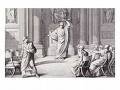
Cícero, denunciando Catilina no Senado

Cícero, denunciando Catilina no Senado

01 março, 2008

Moral e bastonadas


Este intelectual é uma figura bizarra e até algo esquizóide. Diariamente (é uma espécie de pulsão obsessivo-compulsiva), em ritmo quase coreico, berra contra os juízes, que taxa de Torquemadas, mas esquece-se que Torquemadas nada poderiam, num sistema penal moderno, sem a passividade bovinóide de muitos defensores (quem conhece o destino dos condenados no âmbito da execução das penas abe bem do que falo). Depois, em bom estilo jacobino, clama por um sem número de incompatibilidades entre o exercício da advocacia e outras profissões ou cargos, mas parece nunca se ter lembrado que aquele nobre "munus" deveria ser incompatível, antes de mais, com a função de jornalista. Depois ainda, insurge-se contra o novo e efectivamente aberrante sistema de remuneração dos defensores, notório instrumento de funcionarização do advogado, mas não se dá conta, coitado, que um tal regime é em tudo próprio do estilo sans-cullote que é a marca de água as suas intervenções e em que, de modo intencional ou não, está a transformar a advocacia. Talvez com excepção do próprio, todos já se aperceberam da dimensão lilliputiana da autoridade moral do homem. Mesmo dentro da agremiação a que agora, por infelicidade dos agremiados, preside.

Relação análoga à dos cônjuges, mas mágica


Na recentíssima «reforma penal» a «unidade de missão» (cujo homem do leme era o agora Ministro da Administração Interna) alterou o crime de «maus tratos», cindindo-o em dois (o que até nem parece mal), alterando-lhe também a respectiva redacção (e aqui é que as coisas começam a ter graça).
Ora, no texto do novel artigo 152.º, agora crismado de «violência doméstica», ficou a constar que:
«1 — Quem, de modo reiterado ou não, infligir maus tratos físicos ou psíquicos, incluindo castigos corporais, privações da liberdade e ofensas sexuais:
a) Ao cônjuge ou ex -cônjuge;
b) A pessoa de outro ou do mesmo sexo com quem o agente mantenha ou tenha mantido uma relação análoga à dos cônjuges, ainda que sem coabitação; (...) é punido...»
(bold e itálico meus).
Com aquela expressão a bold itálico o legislador quis abranger no âmbito de tutela deste tipo de ilícito os «namorados» ou «namoradas» (ou vice-versa...).
A ideia parece ser mais ou menos esta: se dermos umas cambalhotas juntos; se trocarmos umas carícias; ou simplesmente se dermos uns passeios, seremos como marido e mulher, mas-só-para-efeito-da-«violência doméstica».
O problema é saber se apenas uma cambalhota permite aceder àquele estatuto; ou se só a partir de duas (!); ou se dois beijos na cara são já suficientes!!!
Importante-mesmo-é-que-a-rapaziada-lá-do-bloco-e-seus-amigos-da-democracia-dos-afectos-tenha-uma-bandeirinha.
Proporcionar REALMENTE à vítima um espaço de liberdade, para que ela própria, com a sua autonomia, em plena liberdade e com total responsabilidade possa decidir o que realmente quer... Isso continua por fazer... E até parece secundário.
As soluções equilibradas dão, claro, muito trabalho a elaborar. São também muito mais difíceis de montar e fazer operar na vida real. Costumam também sair mais caras do que simplesmente alterar uns artiguelhos do Código e fazê-los publicar no Diário da República.
Feito como está cabe lá tudo; o que é o mesmo que dizer que não cabe lá nada...
E «a justiça» que se amanhe.
Começa no entanto a saber-se que, afinal, aquela malta da «unidade de missão» é mais fina do que parece, e o que quis realmente fazer foi deixar uma marca moderna, digo, pós-moderna, no «novo» Código Penal.
Para quem ainda não saiba, a proficiente expressão «relação análoga à dos cônjuges, ainda que sem coabitação» tem como fonte inspiradora uma célebre anedota popular, que corre mais ou menos assim:
Um tipo volta-se para uma garina e diz-lhe:
- Olha lá, queres ter uma relação análoga à dos cônjuges comigo, mas mágica?
- Mágica?, pergunta ela.
- Mágica como?
- É assim, responde ele, nós temos uma relação análoga à dos cônjuges e depois tu desapareces!!!
.
Ora toma. Já perceberam? Esta coisa de andar a meter anedotas no Código Penal não é para qualquer um. É coisa de génio. Está ao nível do Código Da Vinci. Oh se está.

22 fevereiro, 2008

Democracia bem oleada

Apesar de o tempo ser já de campanha eleitoral nos EUA, mesmo assim impressiona o modo como as pessoas se mobilizam, escrevem e protestam. Esta é para mim a questão central, embora a temática mobilizadora também seja interessante.
Poderia simplesmente fazer uma tradução sintetizada do texto infra e, com um pouco de sal e pimenta ficava o comentário feito. Mas as coisas sabem realmente melhor quando se saboreiam também com os olhos. Por isso achei melhor fazer o «cut»; e cá vai:
.
«A recent New York Times article examined a number of decisions by Senator John McCain that raised questions about his judgment over potential conflicts of interest. The article included reporting on Mr. McCain’s relationship with a female lobbyist whose clients often had business before the Senate committee led by Mr. McCain. Since publication of the article, The Times has received more than 2,000 comments, many of them criticizing the handling of the article. More than 4,000 questions have been sent via e-mail to The Times on Thursday night and Friday. Editors and reporters who worked on the article are answering some of the questions on Friday.»

13 fevereiro, 2008

O papel

A um conhecido meu morreu a avó. Nada de anormal, particularmente para quem ainda tem avós.
Acontece que ele, que trabalha, como bom neto, foi ao funeral; ou seja, tem que justificar a falta ao patrão.
Ele justificou dizendo precisamente que a sua avó tinha morrido. Para aceitar a falta como justificada, o patrão pediu uma declaração da funerária.
Aqui é que eu começo a estranhar...
A funerária atesta o quê? Que o rapaz foi ao funeral? Que a avó morreu? Que ela, a funerária, fez o funeral?
Eu não sou desta área mas também trabalho e conheço a lei das faltas; tenho a certeza que ela não fala em funerais mas só em mortes. O parente morre e, automaticamente, temos uma licença de x dias; não interessa se vou ou não vou ao funeral. Mas já interessa que o morto seja um dos parentes indicados na lei (ou pelo meu lado ou pelo da minha mulher); ora, a morte das pessoas é atestada pela certidão de óbito.
Não faço ideia do valor que pode ter a declaração (e qual o seu conteúdo) da funerária mas será que ela substitui a certidão de óbito?
Isto não interessa nada porque o que realmente interessa é um papel. O papel é a prova do facto que se clama mesmo que esse papel não tenha valor nenhum.
Ora, como é muito mais barato o papel da funerária (que, afinal, também faz o funeral) do que o custo da certidões de nascimento e óbito, e se calhar de casamento, para estabelecer que o morto é realmente o parente do trabalhador que faltou, é natural que as funerárias desempenhem hoje mais um serviço público: o de passar o papel que a velha morreu.
Ou seja, a palavra do trabalhador não vale nada; precisa de um papel. Mas isto não interessa nada.
O fundamental mesmo, claro, é que haja qualquer papel!

01 fevereiro, 2008

Um dia negro

Há cem anos a desgraça abateu-se sobre Portugal. Dois malvados, o Costa e o Buíça, foram a mão executora dos escuríssimos desígnios de outros desalmados piores ainda. Estes últimos jazem no Panteão, têm estátuas e placas pelo país fora, foram figuras de proa do catastrófico e maléfico regime de opereta que dois anos e pouco depois do regícidio eles mesmos vomitaram sobre a Pátria, e enfim deixaram uma descendência política que anualmente, a 5 de Outubro, como súcia de vampiros, sai das lojas e se junta aqui e ali, decrépita, leprosa, asquerosa, a lançar "vivas" senis a essa meretriz da república.

Desde a infâmia, Portugal foi sempre decaindo, cada vez mais, de torpeza em torpeza, esmagado por uma pilantragem pelintra e voraz para a qual não encontrou ainda remédio. Além disso (maravilhas da falta de memória), há quem chegue a alçar o crime à dignidade de gesto benfazejo e "libertador" (!), fazendo dos carbonários e dos pedreiros republicanos em geral, como de praticamente todos os demais psicopatas da política nacional de então, uma espécie de campeões do povo e, pasme-se, da democracia - a linda democracia outorgada à nação em 1910, como se antes houvesse ditadura, e cuja tumultuária selvajaria engendrou finalmente a ditadura corporativa, infeliz mas imprescindível acto de higiene que a mesma nação teve que suportar ainda por várias décadas.

Tudo isto já nada mais é do que "momentos perdidos no tempo como lágrimas à chuva"*. Basta recordar, para ter noção do calado da tragédia, a crua e imediata dimensão humana respectiva, prenúncio alegórico do que à Pátria cedo viria: um Rei bom e um Princípe Real inocente, pai e filho, abatidos a tiro à vista da mulher e mãe; uma mulher e mãe, mais do que Rainha, aflita, procura proteger a família e afastar os monstros com aquilo que tem na mão - um ramo de flores.


Muitos anos depois, em Paris ocupada, esta Senhora, francesa de nascimento, idosa, exilada, hasteava na sua casa a bandeira nacional - a feia bandeira trazida pela república celerada, mas em todo o caso a bandeira nacional. Quanto à actual Constituição desta vil república que temos, reza, impante e avara, no seu art. 288.º, al. b), que não pode ser revista sem respeito pela forma republicana de governo, assim pateticamente assumida como presuntivo sinónimo de democracia e proclamada como uma espécie de alcançada meta da História. São formas de estar.


* Phillip K. Dick, "Do droids dream on electric sheeps"

30 janeiro, 2008

Permitido rir (mas não muito)

Marinho Pinto na Sessão Solene de Abertura do Ano Judicial
«(…)
A primeira obrigação de quem participa na administração da justiça é pugnar pelo seu prestígio e pela sua dignificação. E a primeira condição para que a justiça seja respeitada numa sociedade democrática é que os seus agentes se respeitem reciprocamente. Ninguém respeitará a justiça se os seus agentes não se respeitarem uns aos outros.
(…)»

29 janeiro, 2008

La Fiscal de lo «Pito Dorado»


«(…) "Una justicia exclusivamente femenina puede dar problemas. Tenemos una visión propia del mundo. En los delitos de tráfico con alcohol, por ejemplo, las condenas de las juezas son mucho más severas que las que dictan los hombres. Me parece bien. ¿Pero es justo?".Esos datos sugieren lo obvio, que las mujeres son más listas. "Más empollonas, más disciplinadas", matiza. "Pero muchas madres no llegan, no hacen carrera porque la Constitución no se cumple; en Portugal, la discriminación es nítida".
(…)"Éramos un grupillo de universitarios. Yo era una empollona maoísta, una criatura absurda", recuerda Morgado. "La chinoise, la película de Godard, nos retrató perfectamente: arquetipos estúpidos y lunáticos, pensábamos que todo era blanco o negro. Queríamos tomar el poder y globalizarlo, ¡menos mal que no lo tomamos! Después, el mundo evolucionó, cayó el Muro, y tomamos el otro poder. Unos se hicieron intelectuales y otros somos parte de esas élites burguesas que tanto odiábamos". Sobre Portugal país, Morgado es muy crítica, como tantos compatriotas. O más: "Somos un país colgado ahí, muy cerca de África y lejos de Europa. Sigue siendo un viaje largo llegar a Bélgica, a Holanda. Allí todo está a media hora, París, Londres. Internet ha acercado a las élites, pero el pueblo todavía está muy aislado". ¿Habrá solución? "Los portugueses se quejan mucho hasta que llega el buen tiempo. De abril a octubre, prefieren la playa".»
EL PAÍS, 28/01/2008

28 janeiro, 2008

A revolta das ventoinhas


«(...) Acusações não fundadas são como lama atirada para uma ventoinha: apanha tudo quanto está ao seu alcance. Culpados e inocentes. A um bastonário pede-se que seja ponderado e que ajuste o seu comportamento ao cargo para que foi eleito.
Não parece ser o caso. É preocupante. Para a classe e para o país.»
Camilo Lourenço,
Jornal de Negócios,
28 de Janeiro de 2008

DESPACHO


Tendo em consideração as declarações do Senhor Bastonário da Ordem dos Advogados proferidas em entrevista dada a um órgão de comunicação social, a gravidade das afirmações feitas e a repercussão social das mesmas, determino:
Ao abrigo do disposto nos artigos 241º e 262º do Código de Processo Penal, a abertura de inquérito e, nos termos do artigo 68º do Estatuto do Ministério Público, designo, para dirigir a investigação de tais factos, a Senhora Procuradora-Geral Adjunta, Drª Maria Cândida Guimarães Pinto de Almeida, Directora do Departamento Central de Investigação e Acção Penal, que será coadjuvada pela Senhora Procuradora-Adjunta, Drª Carla Margarida das Neves Dias, do mesmo departamento.Este despacho entra imediatamente em vigor.Comunique-se à Senhora Directora do DCIAP.
Lisboa, 25 de Janeiro de 2008
O Procurador-Geral da República
(Fernando José Matos Pinto Monteiro)

CRISE DA JUSTIÇA


Do blogue: FUNES, EL MEMORIOSO, extracto de uma obra prima que vale a pena visitar

«(…) Volta e meia surgem iluminados a dar conta das causas profundas da crise da Justiça: ora são os juízes que são uns calaceiros e acumulam processos em cima das secretárias; ora são os advogados que a nenhuma manobra dilatória se furtam, para entreter as acções que têm entre mãos; ora é o mapa judicial que está desactualizado; ora é o dinheiro que não se gasta na reforma do sistema; ora...
Nenhuma explicação unilateral terá nunca o poder de explicar nada. Os problemas da Justiça são múltiplos e complexos, tendencialmente infinitos e inalcançáveis.
Vale a pena, apesar de tudo, determo-nos em alguns porque, se o sistema não é, de todo, reformável, pode, ao menos, melhorar substancialmente. Vejamos:
O primeiro problema da Justiça em Portugal são as leis. São muitas e muito más e muito inúteis. Legisla-se demais e legisla-se mal.
A boa Justiça é feita com poucas e boas leis, interpretadas e aplicadas por bons juristas que saibam com razão, bom senso e sentido de equidade subsumir os factos da vida à natureza geral e abstracta das normas.
Desgraçadamente, eliminado, por superlativo e supérfluo, o estudo do direito romano das escolas jurídicas, substituído pelas funcionais burocracias de gabinete, a tendência (europeia, mais do que portuguesa, que se limitou, como sempre, a importar a moda) foi a de querer abarcar na previsão legal os mais ínfimos aspectos da vida, como se toda a realidade, todo o universo de situações juridicamente relevantes, tivesse que estar concretamente contido numa hipótese normativa. Do modo como devem ser fabricados os isqueiros, às indicações que obrigatoriamente devem conter os rótulos das embalagens de milho para pombos, tudo, rigorosamente tudo, passou a ser objecto de uma lei, de uma directiva, de um regulamento.
Do mesmo passo, por simples decorrência lógica, o intérprete e aplicador da lei viu-se funcionalizado e reduzido à condição de mero fiscal da realidade, sem outra função que não a de decretar a natureza irreal ou punível de uma pretensão não exaustivamente descrita numa norma.
Eficácia no manuseamento de bases de dados gigantescas, é tudo o que hoje se pede ao juiz. Não, bom senso, inteligência ou sentido de Justiça.
Mas, apesar de todos os esforços, a realidade (sobretudo nos imaginosos países mediterrânicos do Sul) teima em não caber toda na lei. Por isso, o legislador, aflito, tentando ser maior que o mundo, legisla cada vez mais. Tapa cada lacuna do sistema com uma nova lei; e com uma nova lei tapa a nova lacuna aberta pela lei anterior, destinada a tapar uma lacuna.
O sistema embala. E o legislador legisla... e legisla... e legisla...não à medida dos problemas, mas à medida dos factos e da ordem do dia na comunicação social. Tenta-se deter o mundo por decreto-lei. Como se tentam deter os carros com proibições de excessos de velocidade. Como se a realidade e a velocidade pudessem ser sustidas por ordem do poder legislativo.
Regula-se o segredo de Justiça, não por causa do seu sentido ou função, mas por causa do processo Casa Pia; altera-se o regime de supervisão da actividade bancária, não porque alguém tenha pensado melhor nele, mas porque houve um escândalo no BCP; reformula-se a lei de protecção de menores, não para criar uma melhor, mas porque uns míudos assaltaram numas bombas de gasolina a actriz Lídia Franco, do mundo dos famosos.
Acaba a lei e começa a medida avulsa. Acaba a norma geral e abstracta e começa a decisão individual e concreta, à medida da gritaria e do poder de cada um fazer ouvir própria voz: um ministro suspende e desautoriza em directo na televisão a decisão da comissão que negou a reforma a uma doente; abre-se um inquérito e altera-se um sistema de urgências, porque passa nos telejornais o registo de conversas telefónicos surrealistas entre agentes do 112 e os bombeiros de Alijó...
Tudo é incerto e mera função do noticiário do dia (…)»

21 janeiro, 2008

Pakistan


LOOMING JIHADI ANARCHY IN PAKISTAN 


by B. Raman
First published by SAAG on March 30, 2007

There has been an increasingly disturbing challenge to the authority of Pakistan's President, Gen. Pervez Musharraf, from jihadis inspired by the Neo Taliban and Al Qaeda, who are actively supported by a group of retired officers of the Army and the Inter-Services Intelligence (ISI). This group is led by Gen. Mohammad Aziz, a Kashmiri Sudan from the Pakistan-Occupied Kashmir (POK), Lt. Gen. Hamid Gul, Lt. Gen. Javed Nasir, Lt. Gen. Mahmood Ahmed, Maj.Gen. Zahir-ul-Islam Abbasi and Sq. Leader Khalid Khawaja.

Mohammad Aziz and Mahmood Ahmed used to be the most trusted Lt.Gen. of Musharraf when he took over as the Chief of the Army Staff (COAS) in October,1998. It is they who staged the coup against Nawaz Sharif, the then Prime Minister, on October 12,1999, when he dismissed Musharraf while he was flying from Colombo to Karachi and ordered Lt. Gen. Ziauddin, the then DG of the ISI, to take over as the COAS. They prevented Ziauddin from taking over and overthrew Nawaz even before Musharraf's plane landed in Karachi. After taking over as the Chief Executive, Musharraf sacked Ziauddin and had him arrested. He promoted Mahmood Ahmed in his place as the DG of the ISI.

The US did not feel comfortable with them because of their perceived links with the Islamic fundamentalist elements and they had to be shifted by Musharraf under US pressure in October 2001. Mohammad Aziz, who was then the Chief of the General Staff (CGS) in the Army Headquarters, was transferred to Lahore as a Corps Commander. Ahmed was also transferred to a Corps. Both of them have since retired. They were lying low for a while avoiding participating in any activities directed against Musharraf. Even now, they avoid any statements, remarks or actions, which could be misinterpreted as anti-Musharraf, but they have been increasingly hobnobbing with Hamid Gul.

Hamid Gul was the DG of the ISI under Mrs.Benazir Bhutto during the first few months of her first tenure as the Prime Minister (1988 to 90), but she removed him from the post following the fiasco of an attack by the Afghan Mujahideen and Osama bin Laden's followers which he had organised in a bid to capture Jalalabad from the control of the then Afghan President Najibullah's army in 1989. The attack was repulsed by the Afgan Army after inflicting heavy casualties on the invaders.

After his retirement, Hamid Gul joined the Jamaat-e-Islami (JEI) of Qazi Hussain Ahmed and worked for some years for the Pasban, the militant youth wing of the JEI. He is no longer with the Pasban. He now owns a flourishing road transport business and has been at the forefront of all anti-Musharraf and anti-US activities by ex-servicemen.  He has also been helping the Neo Taliban and its Amir, Mulla Mohammad Omar, in running their training camps in Pakistani territory. He has also rallied the support of many ex-servicemen for the current agitation by the lawyers and the JEI against Musharraf over the suspension of Iftikhar Mohammad Chaudhury, the Chief Justice of Pakistan's Supreme Court, on March 9, 2007.

Javed Nasir, former Amir of the Tablighi Jamaat (TJ), was the DG of the ISI during Nawaz Sharif's first tenure as the Prime Minister (1990-93). The US forced Nawaz to sack him because of its unhappiness over his perceived non-co-operation in the implementation of a project of the Central Intelligence Agency (CIA) for the purchase of the unused Stinger missiles from the Afghan Mujahideen. Since then, he has been virulently anti-US and has been helping the Neo Taliban and the TJ. He has also been playing an active role in the mobilisation of TJ cadres to join the lawyer's agitation. Mohammad Rafique Tarar, former President, who was removed from office by Musharraf in 2001, has also been in the forefront of this agitation. He was and continues to be an active member of the TJ.

Abbasi used to be the ISI station chief in New Delhi in the late 1980s. He was expelled by the Government of India. In 1995, the Pakistan Army then headed by Gen. Adul Waheed Kakar, discovered a plot by Abbasi and some other officers to have the General and Benazir Bhutto, then Prime Minster for a second time (1993-96), assassinated and capture power. They were working secretly with the Harkat-ul-Jihad-al-Islami (HUJI). They were arrested, court-martialled and jailed. After coming out of jail, Abbasi has been active in campaigning against the policies of Musharraf. He is since reported to have joined the Hizbut-Tehrir (HT), which has many followers in the lower levels of the army.

Khawaja was also in the ISI and used to be in touch with the Taliban after it came into being in 1994 and Osma bin Laden after he shifted to Afghanistan in 1996. After leaving the ISI, he joined the Jamaat-ul-Furqa (JUF) of Sheikh Syed Mubarik Ali Shah Jilani, which has many followers in the Muslim communities of the US and the West Indies. Daniel Pearl had sought his help for arranging a meeting with Jilani. Pearl wanted to enquire about any links between the JUF and Richard Reid, the shoe bomber. It was Khawaja, who had tipped off the kidnappers of Pearl about his Jewish background and created a suspicion in their mind that Pearl had links with the CIA and Mossad. He is now in detention  on a charge of instigating the women students of a madrasa of Islamabad (Jamia Hafsa) to start an agitation against the demolition of some mosques in Islamabad. This agitation has been going on for the last two months. In addition to other demands, the agitating women students, who project themselves as future wives and mothers of suicide bombers, are now demanding his release from jail. They have been shouting slogans in praise of bin Laden and Mulla Omar.

These retired officers and their followers have been actively helping the Neo Taliban by organising training camps for its recruits and by facilitating its procurement of arms and ammunition. They have also been instigating the madrasas not to comply with the orders of Musharraf for their registration and for the expulsion of foreign students. They have also been urging the tribals in the Federally-Administered Tribal Areas (FATA) and the North-West Frontier Province (NWFP) to continue to provide hospitality to the Neo Taliban and Al Qaeda in their territory and help them in their operations in the Afghan territory. They have been encouraging the lawyers to keep up their agitation against Musharraf.

The jihadis trained, armed and motivated by them have stepped up their activities not only in Afghan territory against the NATO forces, but also in Pakistani territory in reprisal for the co-operation allegedly extended by Musharraf to the US in its war against Al Qaeda and the Neo Taliban. Recent examples of the resulting escalation in the jihadi violence in Pakistani territory are: 
 

  • An unidentified suicide bomber blew himself up at a military training ground near Kharian, 130 kilometers south-east of Islamabad, on March 29, 2007,  killing one (some reports say three) soldier and wounding at least six more. Three Lt. Gen of the Pakistan Army were to visit the camp that day. It is not yet known whether he was planning to kill them and blew himself up prematurely. As the suicide attacker approached the training centre, an Army security guard stopped and asked him to show his identity card. The attacker blew himself up.  This is the eighth incident involving a suicide bomber in Pakistani territory since the beginning of this year.
  • On March 27, 2007, unidentified  gunmen on motorbikes hurled grenades and opened fire on an army vehicle in the Bajaur Agency, killing five persons, including two  officials of the ISI, one of them a middle-level  officer of the rank of Assistant Director. This attack came despite a cease-fire agreement concluded by the Army earlier this week with the pro-Neo Taliban tribal leaders of the Agency.
  • On March 28, there was a confrontation between the Islamabad police and the agitating women students of the Jamia Hafsa madrasa. The students took hostage three women from a house near Lal Masjid to which the madrasa is attached. They accused them of running a brothel.  The police retaliated by capturing four members of the staff of the madrasa.  The women retaliated from their side by setting fire to a police van and taking two police officers hostage. Ultimately, the two sides released their respective hostages.  The deputy imam of the Lal Masjid, which is headed by Qazi Abdul Aziz, and the agitating women students have given a 15- day ultimatum to the police to release Khalid Khawaja and four other activists of their movement who have been detained. The agitating women students and their male supporters from other madrasas nearby attacked police vehicles and seized their communication sets.  The pro-Neo Taliban madrasas and mosques in the Islamabad area have managed to get hold of FM radio equipment from the FATA, to which many of the women students belong, and started making anti-Musharraf and anti-US broadcasts to the people of the capital.
  • On March 26, 2007, there was a clash between the police of Tank (previously known as Tonk), a district headquarters town of the NWFP, and some recruiters of the Neo Taliban who went to a local school to recruit its students to the Neo Taliban. One police officer and one of the recruiters were killed. About 200 members of the Neo Taliban raided the town in retaliation for the death of the recruiter on March 28, looted the local banks and engaged in exchanges of fire with the local security forces for six hours in different parts of the town. The Army had to be called out and a curfew imposed in order to restore law and order.

Earlier, on March 6, 2007, the Governor of the NWFP  Lt-Gen (retd) Ali Mohammad Jan Aurakzai, had convened a meeting attended by the Chief Minister, Mr.  Akram Khan Durrani, and senior officials of the province to discuss the worsening law and order situation in the province due to the escalation in the activities of the Neo Taliban and its local supporters. According to the "Dawn" of Karachi (March 29), the local officials gave the following assessment to the Governor: "“Inaction on the part of the law-enforcement agencies has led to the Government being on the retreat. Writ of the government shrinking with every passing day. Vacuum being filled by non-state actors. Respect for law and state authority gradually diminishing. Morale of the law-enforcing agencies and people supportive of the Government on the decline. Talibanisation, lawlessness and terrorism on the rise.”

The following points were reportedly made at the meeting: The number of bomb explosions  in the NWFP increased from 27 in 2005 to 35 in 2006.In the first two months of this year, there have already been 25 explosions, killing 23 persons.  Talibanisation has particularly affected Tank, Dera Ismail Khan, Bannu and Lakki Marwat.  There has been a  resurgence of the activities of the  Tehrik-i-Nifaz-i-Shariat Muhammadi, particularly in the Swat region where Maulana Fazlullah alias Maulana Radio was making full use of his illegally set up FM radio station to carry on propaganda against the Government. While the situation is getting out of control, there appears to be a total paralysis and inaction on the part of the Federal Government.

Sources in the local police force say that a time when there has been an escalation in the activities of the Neo Taliban and Al Qaeda in the FATA and the NWFP, they are finding themselves handicapped in dealing with the situation for want of adequate forces.  According to them, Musharraf has been giving priority to quelling the Baloch nationalist movement in Balochistan rather than to action against the Neo Taliban and Al Qaeda. As a result, there are more security forces deployed in Balochistan than in the FATA and the NWFP. The peace agreements signed by him with the pro-Taliban elements in South and North Waziristan and Bajaur agencies were mainly intended to enable the Army to divert forces to Balochistan. This has given a free field for the Neo Taliban and Al Qaeda in the FATA and the NWFP. They have not only stepped up their offensive against the NATO forces in Afghanistan, but also launched an offensive against the Pakistani security forces themselves in Pakistani territory.

The Neo Taliban, assisted by Al Qaeda, has become Musharraf's Frankenstein's monster. He helped in its post-9/11 resurgence to achieve Pakistan's Afghan agenda. It is showing signs of slipping out of his control. As regards the role of the retired officers backing the Neo Taliban with their own anti-US agenda, it is doubtful whether they would have instigated some of the incidents mentioned above such as the suicide attack at a training camp of the army and the killing of two ISI officers.

It would seem that the Neo Taliban has assumed a momentum of its own  and is increasingly not amenable to anybody's control----either Musharraf's or his detrators'. The international community has reasons to be seriously concerned over the goings-on in Pakistan. It is slowly moving towards a situation of jihadi anarchy.

(The writer is Additional Secretary (retd), Cabinet Secretariat, Government of India, New Delhi, and, presently, Director, Institute For Topical Studies, Chennai. E-mail: itschen36@gmail.com)


08 janeiro, 2008

PARA UMA BOA GARGALHADA


A propósito do «deslize» do inspector-geral da ASAE, António Nunes, na madrugada do dia 1 de Janeiro, Mário Assis Ferreira, presidente da Associação Portuguesa de Casinos veio dizer que no dia 1 de Janeiro o Casino do Estoril tinha todos os seus espaços com áreas para fumadores e não fumadores, tal como os tem hoje. No Salão Preto e Prata havia uma área para fumadores e outra para não fumadores... e o inspector-geral António Nunes, estava na zona de fumadores… eh, eh, eh, pois claro.

06 janeiro, 2008

O preocupante rumo que as coisas vão tomando


THE NEW YORK TIMES, January, 6, 2008
by Steven Lee Myers, David E. Sanger and Eric Schmitt
«President Bush’s senior national security advisers are debating whether to expand the authority of the Central Intelligence Agency and the military to conduct far more aggressive covert operations in the tribal areas of Pakistan.
The debate is a response to intelligence reports that Al Qaeda and the Taliban are intensifying efforts there to destabilize the Pakistani government, several senior administration officials said.
Vice President Dick Cheney, Secretary of State Condoleezza Rice and a number of President Bush’s top national security advisers met Friday at the White House to discuss the proposal, which is part of a broad reassessment of American strategy after the assassination 10 days ago of the Pakistani opposition leader Benazir Bhutto. There was also talk of how to handle the period from now to the Feb. 18 elections, and the aftermath of those elections.
Several of the participants in the meeting argued that the threat to the government of President Pervez Musharraf was now so grave that both Mr. Musharraf and Pakistan’s new military leadership were likely to give the United States more latitude, officials said. But no decisions were made, said the officials, who declined to speak for attribution because of the highly delicate nature of the discussions.
Many of the specific options under discussion are unclear and highly classified. Officials said that the options would probably involve the C.I.A. working with the military’s Special Operations forces (…)»
LER O ARTIGO COMPLETO

03 janeiro, 2008

O inspector charuto


Logo depois das 12 badaladas e início do dia 1 de Janeiro, data da fatídica entrada em vigor da lei de restrição ao consumo de tabaco, o inspector-geral da ASAE foi apanhado, regaladamente sentado, de charuto na mão, numa mesa do casino onde se encontrava a festejar a passagem do ano.
Quando foi instado a comentar o insólito facto foi lesto a dizer que a lei não refere os casinos como sendo locais onde passou a ser proibido fumar. E tal e coisa… blá... blá...
Que desgraça. Sentindo-se «apanhado» o coitado do inspector tentou remediar a situação. Mas foi pior a emenda que o soneto. Então não é que ao invés de aludir a um excesso etílico, a um impulso involuntário determinado por uma vida inteira de fumador ou a uma circunstância festiva excepcional, teve a distinta lata de confundir uma lei da república com a feira da ladra.
Deveras sabe o infeliz que a lei que infringiu pretende ser o mais abrangente possível de molde a proteger a exposição involuntária (de terceiros, claro) ao fumo do tabaco. Por isso mesmo nela se preceitua, entre o muito mais, que é proibido fumar nos locais de trabalho, nos recintos de diversão e nos recintos destinados a espectáculos de natureza não artística. Ora, qualquer engenheiro, psicólogo, dentista, camionista, trolha ou mesmo polícia percebe que para aquele efeito tanto faz casino como casina, café ou snack-bar, tenda de circo ou sala do São Carlos, em todos esses locais é proibido fumar... e pronto.
Mais grave que a charutada é, sem dúvida, a falta de vergonha. Por isso, num Estado que se respeite exige-se que se lhe dê um valentaço chuto no traseiro e que rapidamente se remeta à procedência, pois que para chefe de esquadra, já se viu, não serve.